

How I see children
My Philosophy
Not a method. A way of seeing.
Montessori is often described as a method. I prefer to think of it as a way of seeing — a way of looking at a child and recognizing, in every moment, that they are already whole. Already capable. Already reaching toward the person they are becoming.
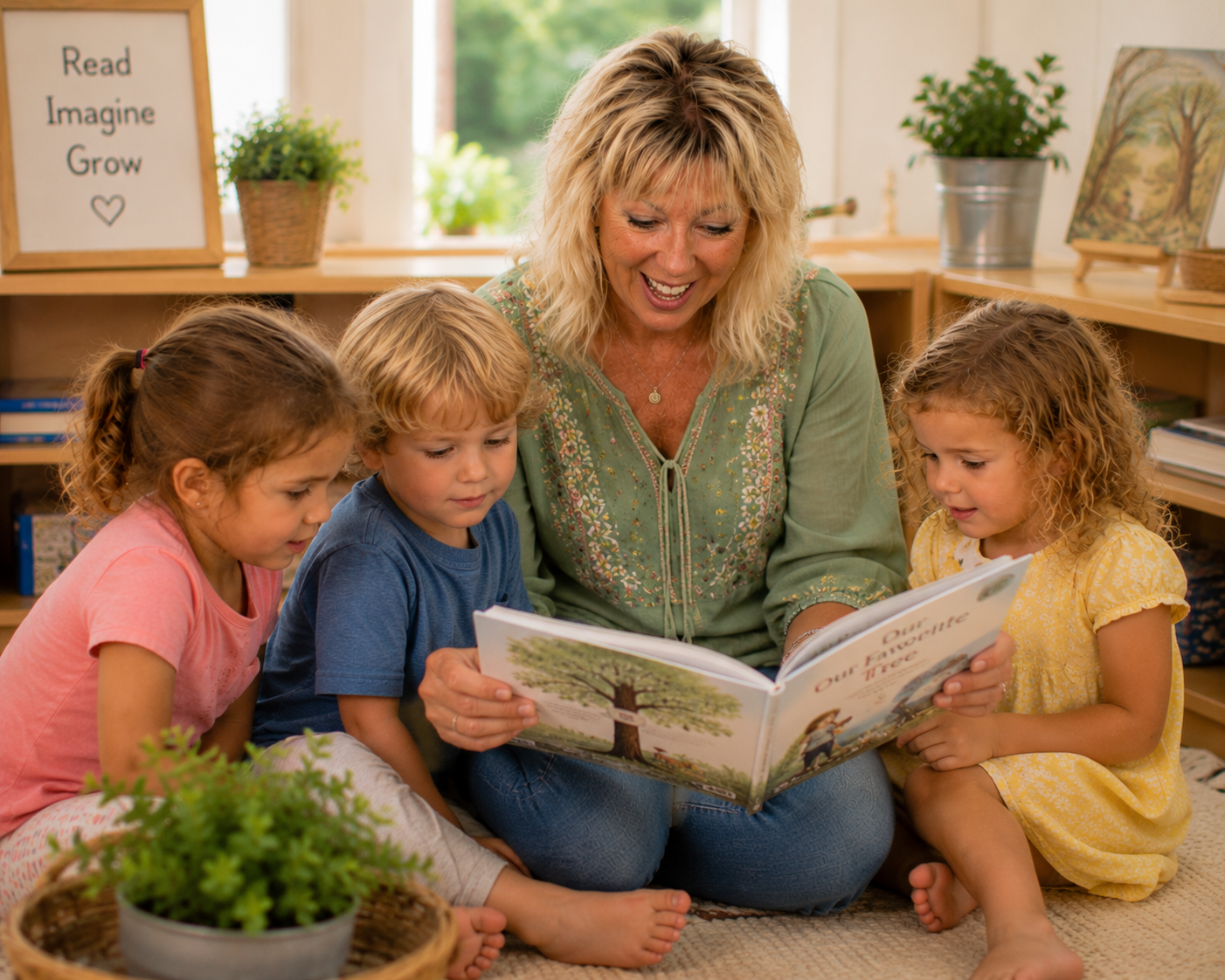
Six things I hold close.
01
Follow the child.
This is the heart of everything. Not the curriculum, not the schedule, not the lesson plan — the child. Their curiosity, their readiness, their particular way of moving through the world. When we follow the child, we discover that they already know the way.
02
Prepare the environment.
The environment is not a backdrop. It is a teacher. A space that is ordered, beautiful, and full of invitation speaks to a child before a single word is said. I spend as much time preparing the environment as I do preparing any lesson.
03
Trust the process.
Real learning is slow. It is quiet. It often looks like nothing is happening — and then, suddenly, everything happens at once. I have learned, over thirty years, to trust the process even when it is invisible. Especially when it is invisible.
04
Honor independence.
The deepest gift we can give a child is the experience of doing something themselves. Not being helped too soon. Not being corrected too quickly. The moment a child says 'I did it myself' is the moment everything changes.
05
Protect wonder.
Wonder is fragile. It can be hurried away, tested away, scheduled away. One of my most important jobs is to protect a child's sense of wonder — to keep the world strange and beautiful and full of questions for as long as possible.
06
See the whole child.
A child is not their reading level or their behavior or their test score. They are a whole, complex, beautiful person — with a body, a spirit, a social life, an emotional life, and an inner life that deserves to be seen and honored.
On Montessori.
Maria Montessori was a scientist, a physician, and a revolutionary. She observed children with the precision of a researcher and the love of a mother, and what she found changed education forever.
What she found was this: children, given the right environment and the right freedom, will teach themselves. They are not empty vessels to be filled. They are active, self-directed learners who are already reaching toward knowledge, order, beauty, and connection.
I have spent thirty years watching this happen. It never gets old.
The greatest sign of success for a teacher is to be able to say, 'The children are now working as if I did not exist.'
— Maria Montessori
What this looks like in practice.
In practice, my philosophy means that I spend a great deal of time observing before I teach. I watch how a child moves, what they reach for, where their attention goes when no one is directing it.
It means I prepare environments with great care — choosing materials that are beautiful, purposeful, and exactly right for where a child is developmentally.
It means I am comfortable with silence, with slowness, with the long unhurried arc of real learning.
And it means I partner deeply with families — because the most important environment in a child's life is not the classroom. It is home.
Does this resonate?
If this way of seeing children feels right to you — if it matches something you already believe but haven't yet found words for — I'd love to talk.
Let's Have a Conversation